· Cindy Manning · blog · 12 min read
Christ the King Sunday Sermon: Meeting Jesus in Unexpected Places
Cindy Manning's Christ the King Sunday sermon on Matthew 25:31-46: sheep and goats alike, we meet our King in unexpected places.
Cindy Manning preaching the Word, November 22, 2026, Christ the King Sunday — Ezekiel 34:11-16, 20-24; Ephesians 1:15-23; Matthew 25:31-46
Grace, mercy, and peace be with you from God our Father and our Lord and Savior, Jesus Christ. Amen
Where do you expect to find Jesus the King?
This Sunday is the last in our liturgical calendar. It is a time when we leave with the lessons we’ve learned from our scriptures and experiences this year and then begin it all over again. Between this week and next, we’ll prepare for and enjoy Thanksgiving. A time when we eat too much, when we reflect on the things that we are thankful for. Perhaps we’ll spend time with our family and friends. It’s a time when some will go out and help feed those who are hungry. In our church, it is a time of transition. Transitioning, as of a week from today, we will begin preparing for Advent and Christmas. While we also experience a longing for God’s kingdom in a weary world… we find it a struggle sometimes with the reality that both are already here and yet have not arrived. We see God in our everyday lives as a Christian family, yet we anxiously wait for his kingdom to arrive.
As many of you are aware, today is Christ the King Sunday. A Sunday when we, as Lutherans, along with some other churches, celebrate and acknowledge that Jesus Christ is King of all kings. As we read through the Scriptures, we hear Jesus called many things: Son of Man (Matthew 25:3), Son of God, “King,” which implies Messiah, Son of David (Matthew 1:1–22, 21:4–9), and “Lord” (25:37, 44). He is the messianic shepherd who cares for the sheep (2:6, 9:36, 18:12, 26:31) and “judge” who makes the final separation between sheep and goats. He is looked upon as even “the one who comes” (25:23–39). As you can see, Jesus is called many things, but all of these point to a savior that ranks above all others, yet we would not know that if we were to look for him.
In today’s scriptures, the first reading from Ezekiel parallels Matthew in that we see imagery of King, Judge, Shepherd, good flocks, and bad flocks. In the second lesson, Ephesians encourages us to be one body in Christ. To be children of the light. To recognize that we are part of God’s family.
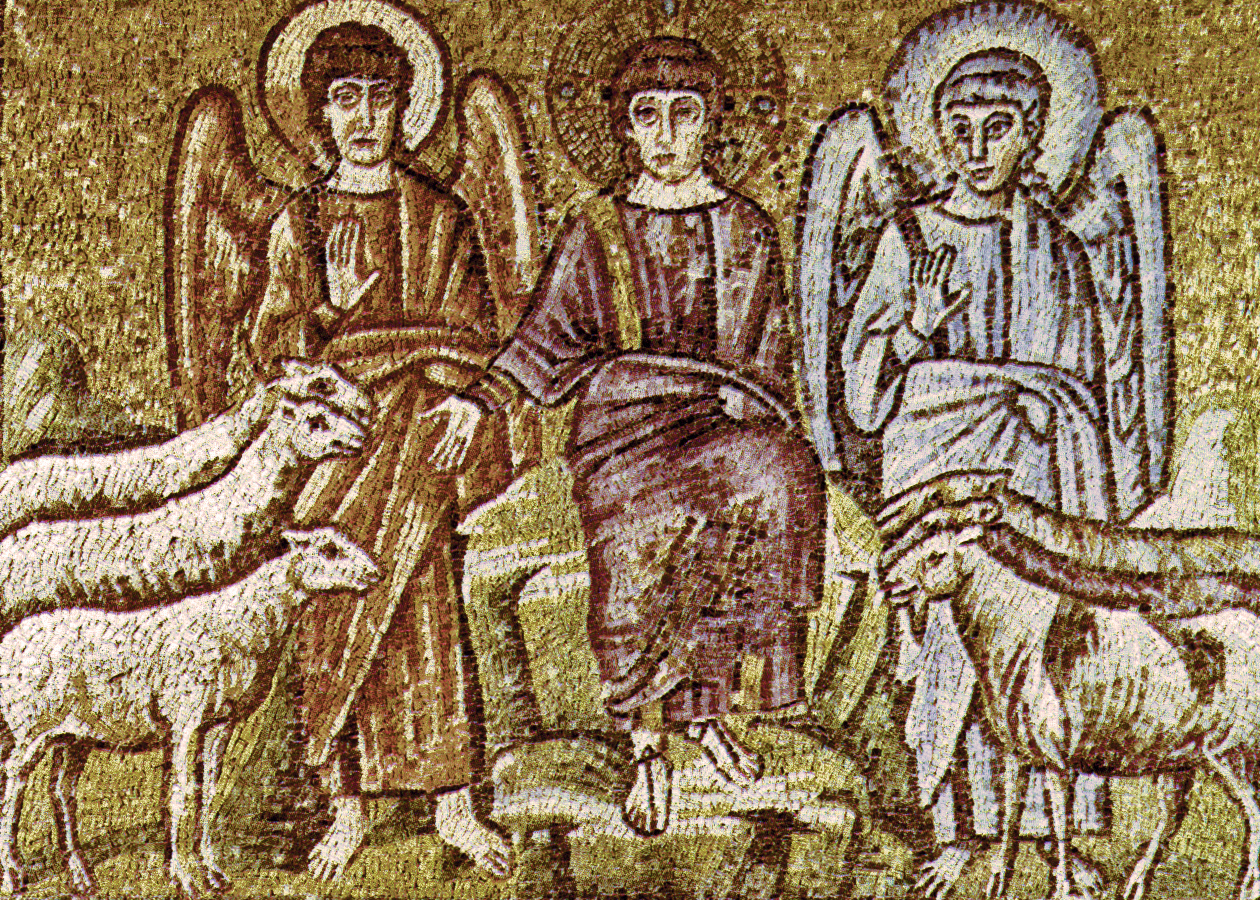
In today’s Gospel, Matthew’s writing is quite a bit different from the previous parables. The earlier ones spent a great deal of time warning us about living responsibly and about being ready for the coming of the Son of Man (24:32–25:30), like the ten bridesmaids and the talents. Matthew in today’s reading reverts to the actual coming as already pictured. This is unique to Matthew and is depicted as an apocalyptic drama. It depicts the coming of the Son of Man, angels on one side, and evil on the other side, and the separation of sheep and goats. Today’s gospel is a great story of judgment. In the end, the faithful are those who serve Christ. Those who care for others before themselves. If one were to step back and look at this story, they might find it upsetting. A difficult picture to look at. It might seem scary, doom and gloom. Sheep on the right and goats on the left.
Let’s talk a bit about those sheep and goats and how exactly do they relate to us? In Jesus’ time on earth, the actual sheep and goats kind of looked similar. The people of that day may have even found it difficult to separate the two. So, it may have also been difficult for them to understand exactly what that difference was. Have you ever known someone who looked like a lovable sheep only to find out they were actually a goat? It reminds me of that commercial “It’s only the flu; it’s just the flu.” Where the wolf walks into patients’ rooms wearing a sheep disguise on its back. For today’s lesson, perhaps the wolf that was in the commercial should have been a goat. There are times when sheep look like goats and goats look like sheep. Sometimes, in people’s actions, it can be difficult to tell the difference. But even more interesting than that is that Jesus is present with both the goats and the sheep. It is not our place to judge, nor separate out the sheep from the goats. How would it look if we really did embody that presence in Christ in all that we do? Both when we are goats and sheep. What if we looked beyond the outward appearance and saw what was under what we visually see? What would that look like? What would it look like if all of us, regardless of position, politics, race, culture, economics, etc., just looked like sheep in God’s flock? Isn’t that the goal? Isn’t that the picture Jesus Christ strove for us to become? But where do we find our way to look like that?
Remember, on All Saints’ Sunday, I talked about being Saints and Sinners simultaneously. That Martin Luther believed that we were saints and sinners at the same time? We are saints in the family of God, yet we are all sinners too. Does that not mean that we are sheep and goats alike? Maybe we should just call ourselves a geep, which is a sheep-goat hybrid. I prefer the term shoat, and some use that term, but a shoat is actually a pig. Who would have thought that?
A story that ties into today’s gospel is Leo Tolstoy’s famous short story, “Where Love is, God is.” It’s about a grieving shoemaker who discovers that serving people in need is how one meets God. The story is about grief and renewal. After losing his wife and children, Martin falls into despair and bitterness. A visiting missionary comes along and encourages him to read the Gospels. In doing so, it brings Martin peace and a desire to live for God. Martin dreams that Jesus will visit him the next day. He watches through his basement window, which looks onto the street. However, when Martin does this, he can only see the feet of those who pass by, but Martin recognizes the people by their boots. After all, he was the town’s shoe cobbler.
Through that window, he has three different encounters: He responds to everyday needs rather than miracles. He brings in an elderly man, a freezing snow-shoveler, and warms him up with hot tea, not just one cup but more. He shelters a poor young mother and her baby, giving them food, warmth, and his own warm cloak from his closet. He steps into the middle of a street argument over a stolen apple, encouraging forgiveness and reconciliation rather than punishment. That night, however, he felt as though Christ never arrived; Martin then goes ahead to read a passage echoing Matthew 25 and sees visions of people he helped, realizing that his acts of compassion were how Christ came to him. He read the gospel just where it had opened. At the top he read:
“I was hungry, and you gave me food; I was thirsty, and you gave me something to drink; I was a stranger, and you welcomed me … (Matt 25:35), and at the bottom of the page he read: “Truly I tell you, just as you did it to one of the least of these brothers and sisters of mine, you did it to me.” (Matt. 25:40) “And Martin understood that his dream had come true; and that the Savior had really come to him that day, and he had welcomed him.” (Leo Tolstoy Archive)
What does this story tell us about Christ as King? Does it not tell us that we will, in fact, meet him in unexpected places? This should not come as a surprise to any of us. Jesus is not an ordinary king. He is not a king who has large armies. He’s not a king who has big parades and waves at the crowds. Remember that Jesus, throughout his ministry, was found in unexpected places. He was born in a stable, not a place one would think of a king being born. When he was twelve, his parents could not find him, yet he was in the temple teaching and asking questions. Letting his parents know they should have known he would be doing the work of the “Father.” He picked his disciples, some of whom were people that others found distasteful. He ate with tax collectors; he met the Samaritan women at the well. He did not reject “unacceptable women” of that world, like the sinful women that washed his feet with her tears and dried them with her hair etc. He was a king who spent time in unexpected places, with unexpected people and those who were considered “unacceptable” people. He healed the sick, living by the example of what love and compassion look like.
So, what does Matthew’s passage really tell us? Does it tell us that we must do good works to get on the right hand of the Father in judgment? Does it tell us that how we treat others is our ticket into heaven? Or do we find an underlying story about grace here? Is it telling us that if we are faithful believers and accept Jesus’ invitation, we are not to worry? If we are saved by grace, then what does it mean? Does it mean that we really shouldn’t need to take care of others?
In the book of James, Jesus says that “faith without works is dead” (James 2:26). Also, we are new creations in Christ, and God is at work in us to bring our “will” and our “work” in line with the model of Jesus’ own life (see Phil. 2:12–13). Faith and works are both signs of a confident and unwavering trust in the power of God’s wisdom in us. Not only to weather the storms of life but to grow in faith (James 2:14–26). My brothers and sisters, taking care of others is what we as believers do. We understand that this is part of what it means to be a believer. It is that we understand that our work is constant. That we are to treat our neighbors as ourselves. We know that we are sometimes sheep and goats. And that because of forgiveness and grace, that’s okay.
Perhaps one big message from today’s scriptures is that we should stop spending so much time trying to figure out if we are in the “in” or the “out” group. But instead, spend time living and loving each other. Understanding that if we do that, we will flourish. We should live toward Christ and each other. Faith is a way of living, not just some random idea.
We understand that Jesus Christ, our King of kings, made the ultimate sacrifice so that we don’t have to be afraid of that day of judgment. While the message looks scary at first glance, we should find comfort and hope that we are already part of God’s family. We are already given assurance in our baptism and our commitment to faith that we will be raised through Christ Jesus. Brothers and sisters, this is the most wonderful news we know. We need to remember that He chose his sheep. He picked them; He chose us. He always takes the first step toward us, his sheep. We have one hope, and that is the salvation through the death of Christ upon that cross. We must find peace, comfort, and hope in knowing that Jesus Christ has the final word. And we are already chosen; we are already in God’s family.
How do we know this? In today’s Gospel, Jesus illustrates the qualities and values that we as Christians live by. This is what we do! This is who we are and should be. This is and always will be God’s plan.
On this Christ the King Day, I encourage and invite all to let go of trying to figure out who we think are sheep and who we think are goats. Let’s stop worrying about whether we will be sitting on God’s right hand or left hand. How about we look straight into the eyes of King Jesus and allow him to work in our hearts to do the things he would be doing. To reach out or to continue to reach out to those in need with love and respect. To feed or continue to feed the hungry, to give water or continue to give water to those who are thirsty, to clothe or continue to clothe those who need clothing, to warm those or continue to warm those who are cold, and to be that friend to those without friendship. May each and every one of us reach out to those who need to hear the good news. This is what living out our baptism is all about. May we spend every day trying to become more like the King we adore.
Just as Jesus was and is found in unexpected places, our greatest joy may come from joining others in those same places: the places others avoid, where people are looked upon as goats, and where someone simply needs a friend’s love. These are the places where we are likely to meet Jesus, our King, as the Holy Spirit moves us to act.
Let us pray:
Eternal Father, creator of all things, you sent Jesus Christ to rule over all things and made us servants in your kingdom. By your Spirit, empower us to love the unloved, serve those in need, and seek your realm of justice, righteousness, and peace. Bring us at last into our eternal joy, through Jesus Christ our Lord, who lives and reigns with you and the Holy Spirit, one God, now and forever. Amen.
Where will you meet the King this week? Christ the King Sunday closes the church year, and this Sunday we begin again with Advent. Come prepare for Christmas with us. Join us Sunday at 10:00 AM at Triumphant Cross Lutheran Church in Dothan, and find out what to expect on your first visit. Want to follow along with the readings? Add the lectionary calendar to your phone.
Image: Christ separating the sheep from the goats, early 6th-century mosaic, Sant’Apollinare Nuovo, Ravenna. Public domain, via Wikimedia Commons.
- Gospel
- Grace
- Scripture
- Lutheran