· Howard Young · blog · 8 min read
Parable of the Talents: A Simple Prayer for Using God's Gifts
A sermon on the Parable of the Talents in Matthew 25:14-30: a child's table prayer shows how to receive God's gifts with thanks and put them to use.
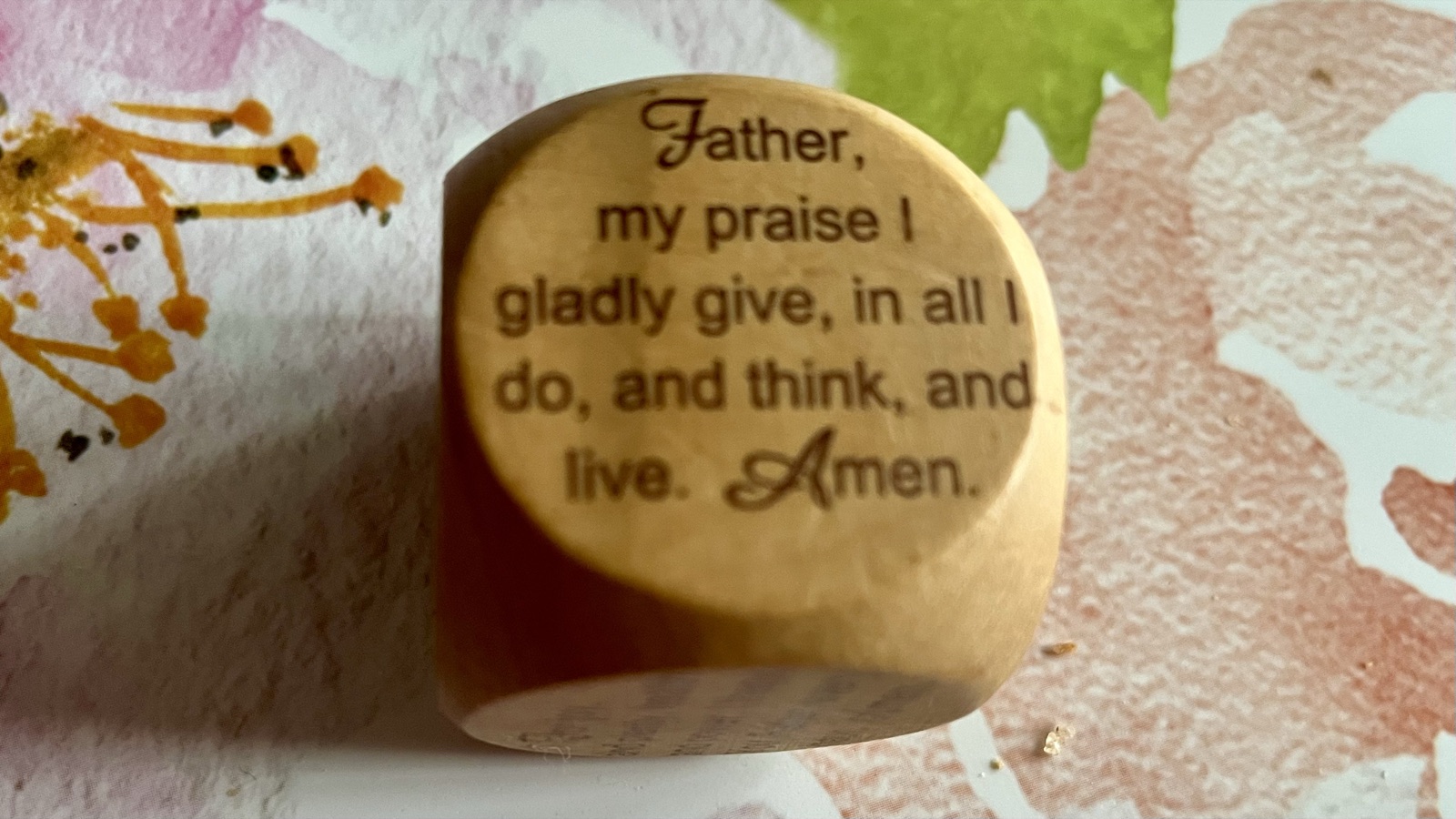
Sermon for November 15, 2026, Twenty-fifth Sunday after Pentecost — Matthew 25:14-30
Grace and peace to you from God our Father and our Lord and Savior, Jesus Christ. Amen
I think we were all tired that night. After the Christmas and New Years Holiday, the first day back to work seemed to drag on forever. I must confess that I was not looking forward to the Executive Committee meeting that night and the extra hour we scheduled to review important budget items made it worse.
Like all Ministries, we start the meetings with a prayer or devotion. The Executive Committee is blessed with both Pastors and we can count on one of them to provide a refreshing and uplifting prayer to open the meeting.
Pastor Janet and Pastor Frank hesitated and asked if anyone would open with a prayer. Frankly, I’m not too spontaneous especially when it comes to impromptu praying. I looked to Gary Bague, then to Steven Kammerer and then to Sheri Groenveld.
Before any of us could volunteer, Sheri’s son Luke raised his hand like he does every Sunday at the Children’s Sermon and said, “I’ll say a prayer.”
“Thank you Jesus for this food, bless it for your use. Amen.”
Perhaps it was the innocence of the prayer. Perhaps it was the fondness of the prayer we say with our family during supper, but the day’s burden was immediately lifted.
It wasn’t until later that night that I realized how a simple prayer was so powerful. Luke, innocent yet wise beyond his age, reached out to Jesus and invited him to our meeting and into our hearts.
From the smallest child to the eldest member of Holy Trinity, God has given us an abundance of gifts. Our gifts — time, abilities, offerings and even simple prayers — are blessed and grow the body of Christ.
We are all burdened from time to time. We rush through life from one event to the next. Relax, and if you get discouraged, just remember what to do, reach out to Jesus, he’s reaching out to you.
A Table Prayer and a Parable
I have thought about Luke’s prayer many times since that night. And when I read today’s Gospel, the Parable of the Talents, I realized that Luke had prayed the whole parable in a dozen words.
Jesus tells of a man going on a journey who calls his servants and entrusts his property to them. To one he gives five talents, to another two, and to another one, “each according to his ability.” A talent was not a skill. It was a weight of gold, by most estimates about twenty years’ wages for a laborer. Even the servant who received one talent was handed a fortune.
The first two servants go at once and put the money to work, and each doubles what he was given. The third digs a hole and buries his master’s money. When the master returns, the first two hear the words every one of us longs to hear: “Well done, good and faithful servant!… Come and share your master’s happiness!” The third servant hands back the single talent and explains himself: “I knew that you are a hard man… So I was afraid and went out and hid your gold in the ground.”
Listen to Luke’s prayer again, one phrase at a time, and you will hear the parable.
“Thank you Jesus”
Everything in this story starts with a gift. The servants did not earn the talents, apply for them, or deserve them. The master simply gave them.
Martin Luther taught us to see our whole lives this way. In the Small Catechism, after listing all that God gives us, body and soul, food and clothing, home and family, he writes that God does all this “out of pure, fatherly, and divine goodness and mercy, without any merit or worthiness of mine at all! For all of this I owe it to God to thank and praise, serve and obey him.”
Thanks come first. Before we do anything with our gifts, we recognize who gave them.
“For this food”
Luke did not pray for food in general. He gave thanks for what was in front of him.
Luther said the same about our daily bread. In his explanation of the Fourth Petition of the Lord’s Prayer, he wrote, “God gives daily bread without our prayer, even to all evil people, but we ask in this prayer that God cause us to recognize what our daily bread is and to receive it with thanksgiving.”
The servants were not given the same amount. Five, two, one. God does not ask you to be thankful for someone else’s talents. God asks you to recognize the ones in front of you: the hands you have, the time you have, the voice you have, the faith you have, even if it feels like one talent next to someone else’s five.
“Bless it”
Notice what Luke did not pray. He did not say, “Help me make this food better.” He asked Jesus to bless it.
The two faithful servants doubled their master’s money, but the growth was never really theirs. It was the master’s money, working in the master’s world. We plant and water, as Paul says in 1 Corinthians 3:6-7, but God gives the growth. That frees us from the pressure of having to make our gifts succeed on our own. We bring what we have, and Jesus blesses it.
“For your use”
This is the heart of the parable. The talents were never the servants’ property. They belonged to the master, and they were given to be used.
The third servant did not steal anything. He did not waste anything. He gave back every cent. His failure was that he never used what he was given, and the reason he gave is telling: “I was afraid.” He saw his master as a hard man, and fear buried the gift.
Luther knew that fear. As a young monk he saw God as a harsh judge, and he later wrote, “I did not love, yes, I hated the righteous God who punishes sinners.” What changed everything was discovering in Scripture that God’s righteousness is a gift, given freely to us through faith in Christ. Once Luther knew he was loved, he no longer had to bury anything.
Luther put it this way in The Freedom of a Christian: “Good works do not make a good man, but a good man does good works.” The faithful servants did not work to earn the master’s favor. They worked because they trusted him. Trust puts gifts to work. Fear buries them.
What If the Talent Shrinks?
Here is a question the parable does not answer. What if a fourth servant had taken his five talents, put them to work, and come back with three? He invested in good faith, the market turned, and he lost money.
I believe that servant would hear, “Well done.”
The master never condemned anyone for losing. He condemned the one who refused to try because he was afraid. A servant who risks the gift and comes back with less has still trusted the master enough to use what he was given. He prayed, in his own way, “bless it for your use,” and left the results in God’s hands.
Think about what that means for us. The Sunday School teacher who prepares all week and only two children show up. The volunteer who offers to lead something and it doesn’t go as planned. The child who brings a handful of coins for Gifts of Love when the goal is a $100 goat. The person who stumbles through an impromptu prayer at a meeting. None of these gifts are buried. All of them are being used. And Jesus, who fed five thousand people with five loaves and two fish, knows exactly what to do with a gift that seems small.
The grace of God is not measured by our returns. It is measured by the cross. We are not saved because our talents grow. We are saved because Christ gave everything for us, and that frees us to give without fear.
Come to the Table
Today, after worship, we gather in the Fellowship Hall for our Thanksgiving Potluck. Before we eat, I invite you to pray Luke’s prayer with me. And as you do, think about the gifts God has placed in your hands this week, five talents, two, or one.
Thank you Jesus for this food, bless it for your use. Amen.
Use what you have been given. Don’t bury it out of fear. And if you get discouraged, remember what Luke taught a tired committee one January night: reach out to Jesus. He’s reaching out to you.
Let us pray.
Gracious God, you have entrusted each of us with gifts we did not earn. Thank you for them. Free us from the fear that buries what you have given, and give us the courage to use our time, our abilities, and our offerings for your purposes. Bless what we bring, whether it seems large or small, and use it to grow the body of Christ. In Jesus’ name we pray.
Amen
Sources
- Opening story: Howard Young, from his article in the Holy Trinity Lutheran Church newsletter.
- Scripture: Matthew 25:14-30 and 1 Corinthians 3:6-7, New International Version.
- Martin Luther, Small Catechism (1529): explanation of the First Article of the Apostles’ Creed and of the Fourth Petition of the Lord’s Prayer, in The Book of Concord, ed. Robert Kolb and Timothy J. Wengert (Fortress Press, 2000).
- Martin Luther, Preface to the Complete Edition of Luther’s Latin Writings (1545): Luther’s Works, vol. 34 (Fortress Press, 1960), 336–337.
- Martin Luther, The Freedom of a Christian (1520): Luther’s Works, vol. 31 (Fortress Press, 1957), 361.
- Stewardship
- Prayer
- Grace
- Scripture