· Cindy Manning · blog · 11 min read
Who Do You Say That I Am? Peter's Confession and the Church
In Matthew 16, Jesus asks the question that cuts to the heart of faith: 'Who do you say that I am?' A reflection on Peter's confession and what it means for the church today.
SERMON 8/23/2026
Grace, mercy, and peace be with you from God our Father and our Lord and Savior, Jesus Christ. Amen
“Who do YOU say that Jesus is?”; “What or who is the rock?”; “What is the church”? and “What are the “keys” and who holds them?
As I read, researched, and pondered today’s Gospel, I quickly noted several sermons, or sermon points that arose in this scripture. First there are the two important questions that Jesus asked of his disciples: “Who do the people say that I am?” and the second being what I believe to be the most important of these two questions-”Who do you say that I am?”
Second, is the great confession as it is called by Peter with regards to this last question.
Third, the debate about who or what is the rock Jesus is referring to in the passage.
Fourth, the church that is to be built - What and where is this church?
Fifth, what about the keys. What are those keys and who will hold the keys?
All of these are themes that are worth studying and while I originally was only going to unpack one or two of them, I decided to address the opening questions which ends up being most if not all of them. I felt it interesting to share with you a little bit about the background of where this event took place. Those of us in seminary or pastors always want to put the passages into context. Looking at the genres and get a feeling where the writer of the passages might be coming from in their writing. So, I’m borrowing the historical context from a devotion written by author Mike Velthouse. He sets the scene like this:
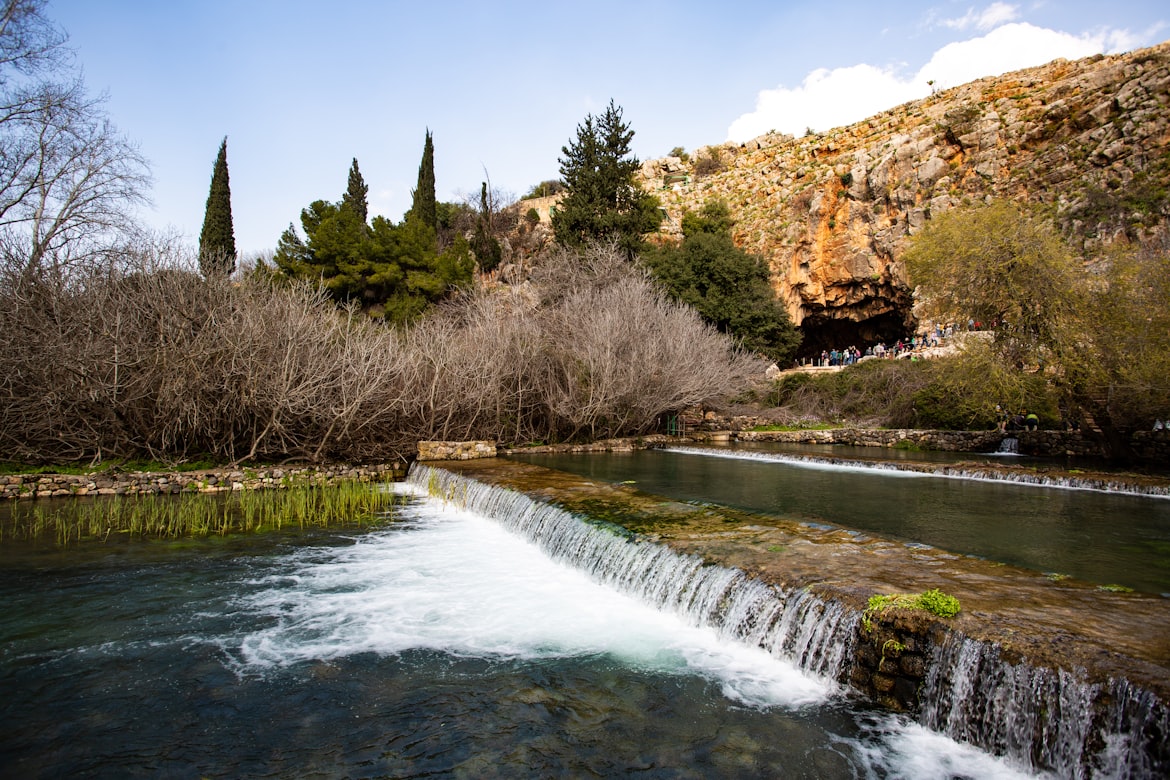
“Jesus and his disciples had just traveled 30 miles north, a two-day journey from the Sea of Galilee to Caesarea Philippi. Jesus led them here for an important reason. Before heading south on the final trip to Jerusalem.
Caesarea Philippi received its name from Herod Philip in honor of Augustus (Caesar worship) and himself (no ego there!). To the far left of where Jesus and the disciples likely stood was located a white marble temple built by Herod the Great in honor of Caesar Augustus. This 60-ft-by-30-ft monument facilitated the worship of the Caesars, who declared themselves gods.
And here at the foot of Mount Hermon was located one of Israel’s most extensive rock formations. Carved into that craggy, limestone mountain cliff were niches, fourteen mini temples, that contained statues of Greek gods, such as Hermes, Nemesis, and Echo. On the ground below was a large platform where several pagan and humanist shrines had been constructed. In the middle stood a sanctuary dedicated to the Greek god Zeus.
The most essential “divinity” worshipped in Caesarea Philippi was Pan, the Greek god of nature, livestock, and fertility. Carved into the cliff face was a grotto that contained a statue of Pan, with the legs, rear, and horns of a goat, and the upper body of a man. The goat was the sacred animal of this god, so the platform below included a section called the Temple of the Goats. Worshippers would dance there with live goats before choosing one as an offering to Pan.
Following the disciples’ gaze, you might have seen water rushing out of a cave located behind Caesar’s temple and next to the statue of Pan. In that cave, seventy-two springs inside Mount Hermon converged into a wild and tumultuous current that flowed down and gushed out onto the mountainside. The gathered waters in the cave were so deep that no one could explore inside. This cavern became known to the people of this region as the “Gates of Hell.” They believed Pan and other gods of the underworld lived inside. It was into this cave that the pagan people threw their sacrificial goats. If a goat survived the currents and the cave swallowed it up, that was a sign that Pan had approved the offering. But if the waters spewed out the goat, Pan had rejected the offering. A scary place, indeed!
Put yourself in this scene. You’ve been traveling with Jesus witnessing him perform miracles, heeling people and answering questions from all who are trying to test him. Then one day he takes you to this location. Your surrounded by all that is described above and he asks you “who do the people say the son of man is? Jesus uses the term “Son of Man” to refer to himself. After some answers are given, he looks right at you and asks, “But who do you say that I am?” What would be your answer? I’m asking you Who is Jesus?
The Gospel today tells us the people gave answers such as John the Baptist, Elijah or Jeremiah or one of the other prophets. But when Jesus asked his disciples who they say he is, Simon Peter steps forward and nails it. He says, “you are the Messiah, the Son if the living God.”. While Jesus knows Peter nailed it, he also tells Peter that the Father in Heaven has revealed this to him. While Peter was very close to Jesus and a leader amongst the disciples, Jesus still sees the truth, he knows that answer was not based on Peter’s experience but that the holy spirit had laid that on his heart. Remember Peter, the one that has a mixed bag of behaviors? The one that had faith and walked on water as Pastor Kay discussed but then had fears and began to sink. Peter, the one that next Sunday we will hear about his questions and doubts regarding Jesus’ predictions. Peter the one that will deny Jesus in the crucifixion story? Yes, were talking about the same Peter here giving the right answer. Jesus totally recognizes that Peter’s answer came from someplace beyond himself. Yet, regardless of Peter’s ups and downs, Jesus never abandons him and he will never abandon us either. Isn’t Peter the picture of some of us? We always know who Jesus is when we need him. When we’re afraid and pray for help. We know who Jesus is on Sunday morning when we come to worship. But do we know who Jesus is when we are disconnected from the sanctuary? Is it human nature to remember when we need him, but more difficult to remember who he is when our lives are going as planned. When we feel confident in ourselves and think we’re living right? I challenge you the think about what kind of relationship you have with Jesus. I challenge you to remember who Jesus is, every single day.
So now in this place where Jesus is with the disciples, he says, “On this rock I will build my church, Note: Here (he says his church), and the gates of Hades will not prevail against it”. Imagine being in that scene at the place many called the gates of hell.
Many debates have gone on about who/what is the rock in this Bible passage. Some think it is Peter (whose name means “rock”). In Matthew 16:18, Jesus says: “You are Peter (Petros), and on this rock (petra) I will build my church”. Others think the rock is Jesus himself. Martin Luther argued that it is the faithful confession that Jesus is “the Messiah, the Son of the living God,” that provides such a foundation. In other words, the rock is Peter’s confession of faith. It is the anchor that holds we believers in active grace.
We’re going to do a little exercise this morning. I would like all of you to take a moment and close your eyes. Now that you have closed your eyes, I’m going to say a word. When you hear this word, I would like each of you to remember the first thing that you see when you hear what I’m about to say. Ready? The word is “CHURCH”. What did you see? Did you see Triumphant Cross Lutheran Church in Dothan, Alabama? Did you see a quaint little white church building amongst the trees with a steeple towering high above pointing toward what many call heaven? Did you see this sanctuary or a one from your past? I’m sure many of you likely pictured a building that has a special meaning to you. Now for the second part of this exercise, I want each of you to look at the person sitting next to you and then around the room at the others in attendance here today. What do you see? I’ll tell you what I see, I see a CHURCH. Not a building, not a sanctuary where we all gather once a week to worship. I see a community. A community of believers formed into the body of Christ in the world. All of us gathered here, united in faith, living our baptism, being taught by the Scriptures and being nourished by the sacraments. We proclaim God’s good news, we live out God’s love and we serve others. The church is not an institution, but a people of God who are called and gathered by Christ through His Word and Spirit.
So now we have established the church is a community of believers formed into the body of Christ, standing on the belief that Jesus is the Messiah, the Son of the living God. The scripture says that Jesus tells Peter, he will give him the keys of the kingdom of heaven. So, is Peter to be the holder of the keys? What is that supposed to mean? In an article by the Reverend David T. Mensing from Concordia, the Office of the Keys is defined in the short explanation of Luther’s Small Catechism: “The Office of the Keys is the power, or authority, to preach the Word of God, to administer the Sacraments, and especially the power to forgive and retain sins”. “This power is called the Office of the Keys because it opens heaven by forgiving sins or closes heaven by retaining sins: “Christ has given this power to His Church on earth, that is, to every individual believer, to every local congregation.” Basically, Christ gave the keys to the entire body of believers. Every individual Christian possesses the keys to comfort a neighbor or family member through forgiveness and love. Is this not also offered by our grace?
The theological implication of this passage for us means that we must always keep the identity of Jesus in our midst. We must always remember who he is. The Messiah, the one who took our place and died for our sins. We must continue to grow our relationship with him. We, yes, we, are the church, the community of believers, that are steadfast in our united faith “the rock” or rather, Peter’s confession that the Messiah is the Son of the living God which keeps the church strong, keeps us strong. Along with this we are given the Keys that comfort and forgive our family, our neighbors and those that repent their sins. We are given the keys to love others as we would want to be loved and cared for. We must remember not to lose the keys. We must remember that, if we possess and do these things, the gates of hell have no chance.
Mike Velthouse put it so nicely at the end of his devotion when he stated:
“The gates of hell have no chance against the faithful preaching of his word throughout the world, or even against the personal witnessing we are called to perform in our individual earthly journey. How encouraging that is!”
Let us pray:
Lord God, Thank you for revealing Jesus as the Messiah, to us. Help each of us to remember and recognize him daily in our lives and allow him to work within our lives. Help us to make Peter’s confession our own and to continually build upon unshakable truth. Help us, your church, to hold on tightly to the keys you have given us that we may never lose them or lose our ability to forgive the transgressions against us. May you always protect us against the temptations of Satan. Thank you for your love, your guidance, your comfort, and your peace. Amen
- Faith
- Gospel
- Scripture
- Discipleship