· Cindy Manning · blog · 11 min read
What Kind of Tenant Are You? The Parable of the Tenants
Cindy Manning's sermon on Matthew 21:33-46, the parable of the tenants, asks what kind of tenants we are in God's vineyard today.
Sermon delivered October 4, 2026 — Matthew 21:33-46
Grace, mercy, and peace be with you from God our Father and our Lord and Savior, Jesus Christ. Amen
What kind of tenant are you?
Today’s Gospel can be a tough story for some to hear. This parable may not be the most known or popular as some of the other parables Jesus told, but it is certainly one of the most eye-opening and perhaps one of the most important ones. The Gospel writers obviously felt it was a very important one. I say this because three of the four Synoptic Gospel Writers (Matthew, Mark, and Luke) mention this parable in their writings. The parables of The Mustard Seed, The Sower and The Tenants all get repeated by these Gospel writers. The vineyard in these verses is described in very much the same way as described in Isaiah chapter 5. The vineyard, the watchtower, etc. But Isaiah 5 is the story of the sour grapes.
One of the most common sermons from this parable is regarding rejection. We all know about rejection, and we know that rejection can be a tough pill to swallow. This Gospel demonstrates a new and significant turning point that would soon be reached in the Jesus journey. If we look at this writing it is fairly easy to figure out which person or group relates to which party in this story. Especially after following the parables on the Sundays preceding this one. Here we take note that the players represented in this story are as follows:
The landowner of the vineyard is God, the one that created it, nurtured it, and trusted the tenants would carefully care for it, and bring in the harvest which they stood to benefit from.
The vineyard is God’s kingdom. His beloved Israel. His chosen people. The people that were promised so much if they would follow God’s commandments.
The tenants in this particular story at that point in time, represents Israel’s religious leaders. The very people that were considered teachers, leaders of the temple and were regarded as holy people. Unfortunately, they ended up becoming wicked and self-serving. They felt they were above the lowly.
The servants are God’s prophets and faithful believers. These prophets knew what was coming if Israel and its people did not repent and accept God. Many of the prophets were those that were killed by the tenants. These prophets understood the importance in keeping the commandments and laws of God.
The beloved son represents Jesus Christ. The messiah. The promised one that would come to save the world. The one who was the son of man. The one who would be crucified by the “tenants” die, be buried, and rise again for the forgiveness of our sins and for our salvation. The one who would be seated at the right hand of God the Father. In this parable, Jesus tells of a landowner who developed a vineyard. He put a wall around it, dug a winepress in it and built a tower so the vineyard could be watched over.
Jesus is telling this parable to the chief priests and elders or Pharisees, the same ones he told the parable to that was discussed last week. After telling them the part about the tenants killing the servants and the landowner’s son, Jesus asks them a question. Matthew 21:40–44, states: “Now when the owner of the vineyard comes, what will he do to the tenants?” They answer that the owner would put the tenants to death, find new tenants that would follow the rules, care for the grapes, and give the produce at harvest time to the rightful landowner. But Jesus takes this opportunity to interject what many find confusing into the middle of this story. Jesus said to them, “Have you never read in the scriptures: ‘The stone that the builders rejected has become the cornerstone; this was the Lord’s doing, and it is amazing in our eyes’? (These words are quoted from Psalm 118:22–23) Matt. 21:42.
Jesus is making the point that even though the religious leaders rejected him, he is the foundation of his Father’s temple. It is here that Jesus is also prophesying his own death. And although his death will make way for the forgiveness of man, there will be a reckoning for those that disobey and reject the one who will become the cornerstone of God’s kingdom. Jesus says to them:
“Therefore, I tell you, the kingdom of God will be taken away from you and given to a people that produces its fruits. The one who falls on this stone will be broken to pieces, and it will crush anyone on whom it falls.” The stone that the builders rejected has become the cornerstone; this was the Lord’s doing. Matt. 21:43–44.
Jesus is warning them that the vineyard will be taken away from those who refuse to repent and submit to God, and it will be given to those who do. God’s vineyard is being opened to the Gentiles and anyone that would submit themselves to Jesus, the cornerstone. Suddenly when the chief priests and elders or Pharisees heard this, they finally realize that Jesus is talking about them. They were the ones rejecting Jesus as the Messiah, they were the ones refusing to repent for their wrongdoing. Jesus is making the point that even though the religious leaders rejected him, he is the foundation of his Father’s temple. Unfortunately, although they understood his point, they did not repent, instead they looked for a way to arrest him.
What are the spiritual implications in our lives from this gospel?
Aren’t we the tenants of today? We are given the charge of nurturing our world. Taking care of it with patient love. Making decisions that impact our world in a positive or a negative manner. We are given the charge to care for our earth. To keep it stable, to appreciate all that it does or has done for us. Have you seen the commercial on TV sponsored by WWF, that shows the green marble? The one that in the beginning provided all we humans with what we needed for survival? Food, clean air and clean water. Then it proceeds to show how pollution is impacting everything. How the forests are diminishing, the animals are becoming endangered, and the land is becoming unfruitful due to neglect and urban sprawl. It then tells how people are listening again and things are possibly starting to change. Perhaps we all need to be better tenants of our earth. It brings up some very important things to think about. When I saw it, I was reminded that we could take certain elements of the commercial and give it a practical application into our own lives as Christians. It reminded me that we as Christians are given new life in baptism, a God that gives us love, a holy spirit that lights our lives up and a grace that gives us freedom. It also reminded me how easy it is to watch it start slipping away. But more importantly, it reminded me how our trust in God’s love can renew us in our daily lives and permit us to regain our faithfulness.
Are we good tenants? Or are we just mediocre tenants or bad tenants? That’s a decision each of us need to decide for ourselves. However, perhaps we should think about some of the following thoughts:
Are we good stewards of our environment? Do we do what we can to protect human and animal rights? Are we good neighbors? Are we taking the best care of each other? Do we welcome all who wish to enter? Do we care for those that have less? Do we live what we preach? Or do we preach how we live then fail to follow what we preach? Do we speak out when we see injustice or do we sit back and wait for “George” to do it. In case you haven’t met George, he’s the one that is supposed to do everything we fail to do but he never gets anything done. Why? Because he doesn’t exist. Do we share our faith with others? Are we good disciples of Christ? Do we resist change when the change is good for the group but doesn’t fit our personal preference? Do we accept grace freely? Do we allow the Holy Spirit to guide our lives? I realize these are a lot of questions. But perhaps each of us would benefit by taking out a piece of paper and evaluating just what kind of tenants we are as part of God’s kingdom.
I can give you a high level of what I see within our church family as a group but as for your personal lives, that evaluation is on you to figure out. Be reminded though that Jesus is with you as you do your analysis. Remember it is perfectly fine to prayerfully ask for help so you can see yourself and where you stand as a tenant.
Even though our church is small, we do what we can to take care of those in need. Our hygiene kits that go to 2-1-1 are well accepted and loved by the recipients. Our donations to the food bank help to feed the hungry. Our support of Lutheran World Relief and Disaster Relief help those who are witnessing perhaps the most difficult times in their lives. All of these are signs of good tenants. We care about each other in our congregation too and provide assistance when and where we can.
Perhaps we can do a better job at spreading the Word of God to others. This isn’t always easy but there are ways of getting it done. We have our website and social media blogsite out there for others to see. This allows them to see and learn what we are about. Our mission is to let others know about the Father, the Son and The Holy Spirit and how our faith can enrich our lives and the lives of others. Our sermons are out there for anyone who is interested in reading them. Can we do better? always. But it’s this kind of work that is God’s work. God’s work, our hands!
As a tenant or worker in the vineyard, we are reminded to look ahead and be faithful responders and stewards of the gifts that God has given to us and to treasure the gift of life, forgiveness, and grace that makes us whole.
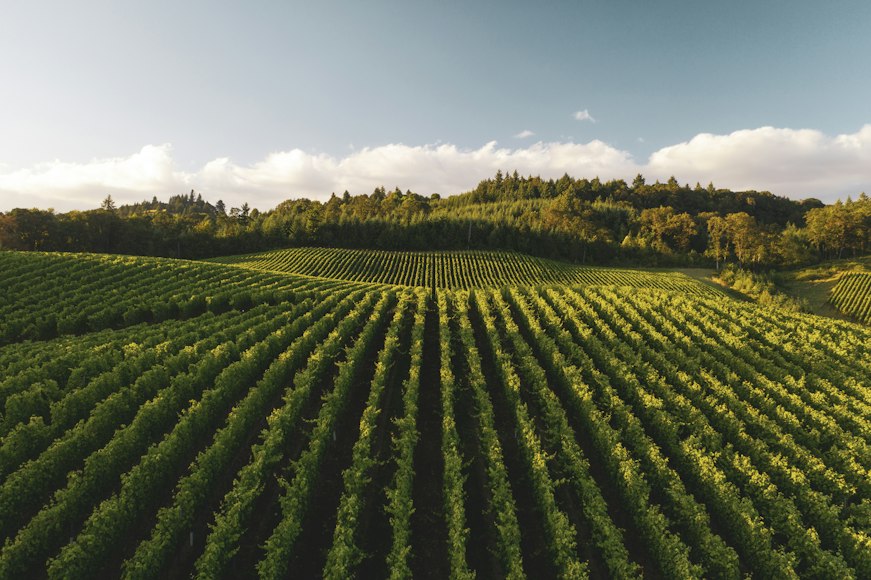
Have you ever noticed as a driver of a car that when you look at your rearview mirror, you see a very limited view? Yet when you look out the windshield of your car you see a fairly large view of what is ahead? Perhaps we should give that some thought. While it’s important for us to look behind us or what has happened in the past to know where we’ve been and what is back there, it’s more important to look ahead. To look ahead to where we are going. To look ahead and see the big picture of what God has in store for us. To look ahead at what the vineyard looks like and what tending needs to be done in order to produce fine fruit. To approach every new opportunity with a strong faith. To look over the vines of our life to see if they are thriving or withering. Is the sight we see when we look ahead, a good view or a blurry and confusing view. We should be reminded to press on toward the goal to win the prize that God has called us to win.
Let’s talk a bit about the love of God that showed up in this parable today. The landowner that was patient and kind, even though his servants were dying. The one that never gave up hope, that exhibited love for others enough that he was willing to sacrifice his precious son so that others could live in eternity. Our God that is just, kind, and full of love. Repeatedly.
We, just as the fruits in the parable, represent us as disciples of Christ. disciples who will share our bread, who will share our wine, and will feed the hungry. All these good things are made possible because of the grace that we are afforded by God.
You remember last week we heard the vineyard is always open. It’s not only open it’s crucial as believers of Christ that we become good tenants in that vineyard. But are we? We have a choice we can make. We can be like the Pharisees and priests and ignore the message, or we can find strength in the temple with the cornerstone of Christ. Where we will find comfort, forgiveness, grace, and love.
Let me ask you again, what kind of tenant are you?
Amen
- Scripture
- Gospel
- Stewardship
- Discipleship