· Howard Young · blog · 3 min read
The Parable of the Sower: What Kind of Soil Are You?
Pastor Kay's sermon on the parable of the sower asked a question worth sitting with: what kind of soil is your heart right now — and what does God do with it anyway?

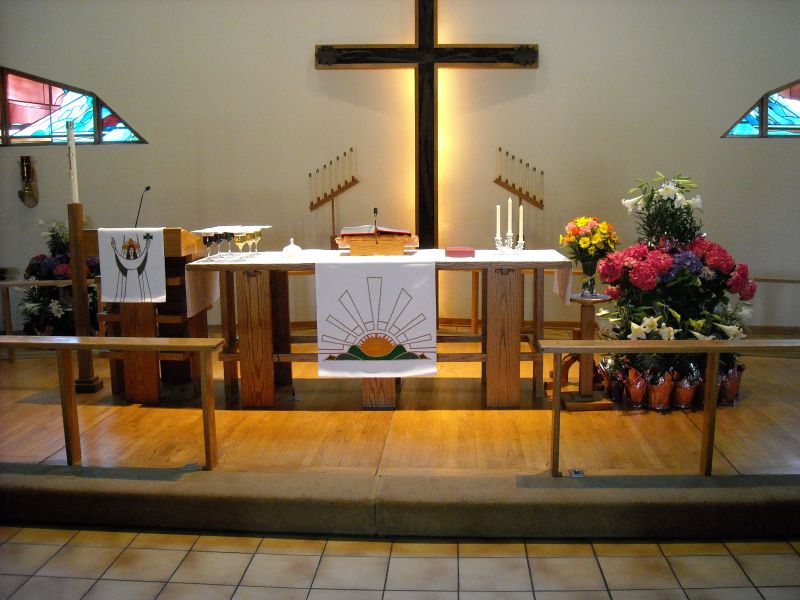
Last Sunday, before the adult sermon even began, Pastor Kay handed seeds to the children. She asked if they had gardens at home — nearly every hand went up. Vegetables, watermelon, the usual summer bounty. That simple moment set the stage for one of the richest sermons we’ve heard at Triumphant Cross in a while.
The Parable Is Not About You
The lectionary Gospel was Matthew 13:1–9, 18–23 — the Parable of the Sower. Her first and most important point: to understand any parable, you have to identify who the main character is. In the Parable of the Sower, it is not the soil. It is not you. The sower is Jesus, and the seed is his Word going out into the world without reservation — scattered on every kind of ground.
That reframing changes everything. The parable is not primarily a warning about what kind of listener you are. It is a declaration about what kind of sower Jesus is — generous, persistent, unfazed.
Four Types of Soil, One Honest Question
Still, Pastor Kay invited us to sit with the honest question: where are you right now? The four soils — the path, the rocky ground, the thorny ground, and the good soil — aren’t permanent labels. They describe seasons.
Martin Luther, preaching on this parable in his Church Postil, made a similar observation. Luther insisted that the fault in the parable lies not with the seed — God’s Word is always powerful and never defective — but with the condition of the soil. He warned preachers not to despair when the Word seems to take no root, because the seed goes on doing its work even when we cannot see it. And he reminded hearers that hard soil can be broken, rocky ground can be cleared, and thorns can be uprooted.
That is a word of hope, not condemnation.
Seeds in the Cracks
This landed differently for each of us in the pews. One way to hear it: the rocky-ground years — the decades when faith felt shallow, when career or busyness crowded out everything else — were not wasted. Seeds that fall into cracks are, as Pastor Kay noted, remarkably hard to get rid of. Given time, a plant rooted in a crack will split open the hardest concrete.
Isaiah 55:10–13, the first reading that morning, says it plainly: God’s Word “will not return to me empty, but will accomplish what I desire and achieve the purpose for which I sent it.” The sower’s seed keeps working. The soil keeps changing.
You Are Not Stuck
If the parable of the sower teaches anything for daily life, it is that your current soil condition is not your final condition. Pastor Kay closed with that grace: where you are today may not be where you are tomorrow. The seeds are already there, scattered by a sower who does not give up.
If questions from Sunday’s sermon are still with you, we’d love to talk. Join us at Triumphant Cross Lutheran Church in Dothan — newcomers are always welcome, whatever kind of soil you bring through the door.
- Scripture
- Faith
- Gospel
- Lutheran